Silhouette & Shadow Hiding — Japanese Community Survival Tactics
Japanese player guides (note.com, Gamerch, mecchachameleon.blog) stress eliminating human outlines and matching shadows — not just hue. Chair-leg poses, clutter depth, and open-area color discipline explained.
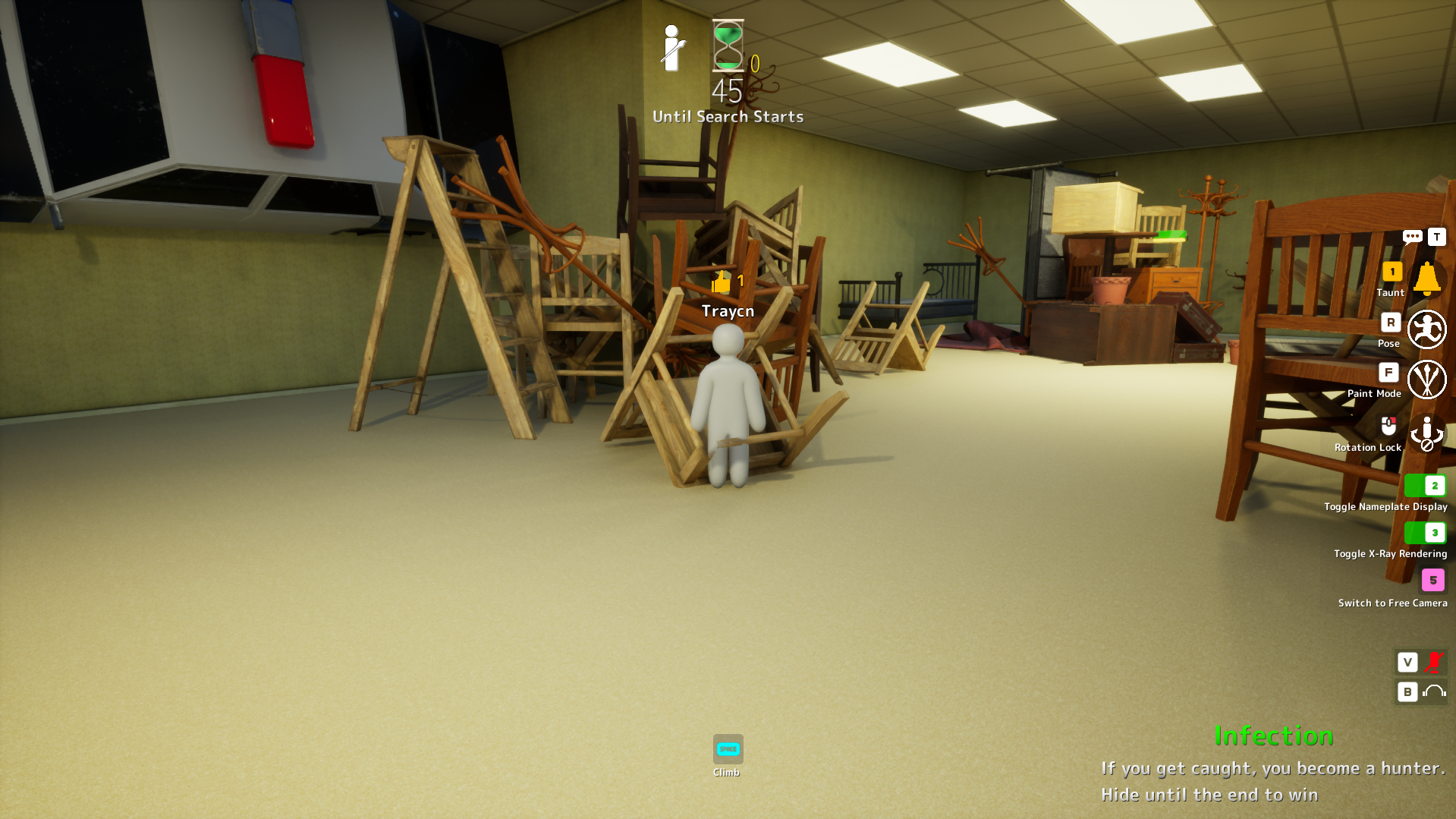
"Stop Being Human" — Outline Over Hue
note.com/imokotrader's widely shared Japanese guide argues the core skill is not art talent but eliminating the human read: become chair legs, floor grain, or pillar edges so seekers do not register a player-shaped lump. mecchachameleon.blog agrees — winning hide-and-seek here means stage color, prop placement, corners, shadows, and sightlines together, not a pretty single-tone fill. Gamerch warns beginners that moving randomly is forbidden; stillness with local color beats perfect paint on a standing silhouette. This complements our Prop Mimic & Cluster guide with a shadow-first framing popular in Japanese Steam and note communities.
Shadow Betrayal — When Paint Looks Right but Lighting Fails
note.com/imokotrader titles a section on shadows exposing hiders who nailed hue but ignored value direction: a body painted wall-bright while sitting in a dark corner reads as a sticker; floor shadow mismatch gives seekers a free tell. mecchachameleonwiki.com recommends sampling both lit and shadow tones with the spoid tool — similar to English guides — but Japanese threads emphasize testing from the seeker's approach angle, not only your hide camera. Sample shadow-side pixels when tucking under furniture; sample lit tops only when your pose truly faces the light. Patch v1.1.0 brightened some stage shadows per community notes — re-verify dark-corner hides after updates.
Chair-Leg & Low Horizontal Poses

note.com's "chair leg" tactic: slide under cluttered desks or chair rows, paint legs and floor grain, use sideways or low poses so vertical human height disappears. Gamerch lists furniture-adjacent spots as recommended because flat planes expose outlines —凹凸 (uneven geometry) forgives sampling errors. Backrooms chair stacks and Meeting Room cubicle mazes on Meccha Wiki are English-database equivalents — crouch among legs, not beside them. Middle-mouse 360° check for white elbow gaps before hunt phase ends.
Three-Stage Clutter Depth (Near Miss → Deep Hide)
note.com describes a phased approach Japanese players call shell-style hiding: stage one — hide among busy objects so seekers glance past a near miss; stage two — push deeper under or behind the cluster; stage three — freeze in a pose that removes human height entirely. mecchachameleon.blog tells seekers to prioritize unnatural roundness and broken patterns before hue — hiders who understand that logic reverse it by nesting inside pattern noise. Indoor Country hay piles and gumdrop clusters on our database are official-map versions of the same depth principle.
Do Not Repaint in Open Sight
note.com uses an octopus metaphor: changing colors in the middle of open ground is like a cephalopod exposing itself — seekers track movement and value shifts. Finish base coat in cover during prep phase; emergency repaints belong behind door frames or during seeker back-turn, not center-room. Mobalytics and our Why Keep Getting Found guide echo the same rule in English — Japanese community threads just stress it as the number-one ranked mistake after flat one-color paint.
Missed-Spot Ranking vs Survival
note.com notes surviving with a low "missed spot" ranking on the results screen can still mean a strong hide — seekers never looked at your zone. Conversely, top missed-spot ranks mean many hunters almost tagged you; high rank is not always better if you died. Use Results Screen guide to study both outcomes after rounds. Japanese players treat the reveal UI as a teaching loop; English players often only watch streamer clips without reading rankings.
Play Seeker to Learn Silhouette Tells
Gamerch and mecchachameleon.blog both insist hiders should play seeker rounds to learn where outlines pop — background color match alone fails when shape, shadow, or pattern breaks. Seekers hunt unnatural roundness, pattern discontinuities, and shadow direction before perfect RGB. After a seeker session, note which chair stacks you skipped — those are your next hider targets. Our Hunter Guide lists the same tells with English community sourcing.
Silhouette Prep Checklist
Before hunt timer: (1) pick clutter with depth, not flat wall; (2) sample shadow and lit pixels your pose touches; (3) choose horizontal or tucked pose removing head height; (4) 360° white-gap check; (5) freeze — no open-area touch-ups. Pair with Prop Mimic guide for object-specific setups and Color Matching for hue/value basics. Re-test after patches that alter shadow brightness or prop collision.